

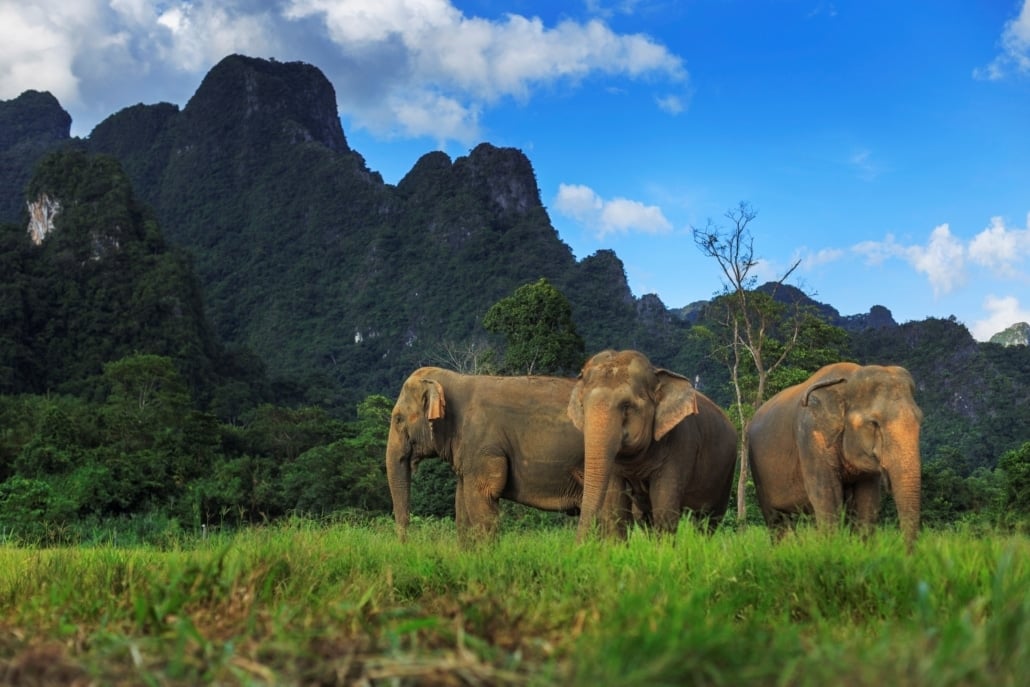
The most rewarding ethical elephant experience in Thailand in 2026 asks you to do very little. It asks you to slow down, pay attention, and watch. At Elephant Hills in Khao Sok National Park, the Ethical Elephant Experience has evolved to place genuine animal behaviour at the heart of every visit. What unfolds when you simply observe elephants living freely is, by any measure, more remarkable than any scripted encounter.
Why Observation Has Become the Gold Standard for Elephant Welfare
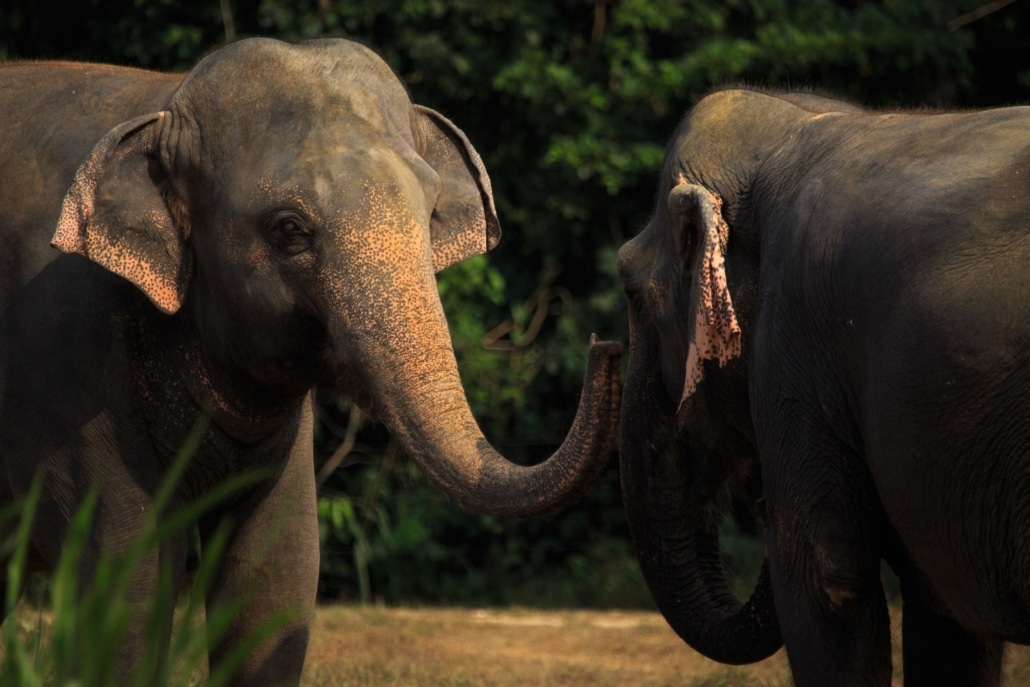
Observation-led elephant experiences consistently receive the highest welfare scores in independent assessments of Thailand’s captive elephant tourism industry. According to World Animal Protection’s 2026 research, only around 7% of captive elephants in Thailand are kept at venues offering observation-only experiences, up from 4.6% in 2010, but still a small minority. That figure matters. It means that genuinely ethical options remain rare, and that choosing one represents a meaningful decision.
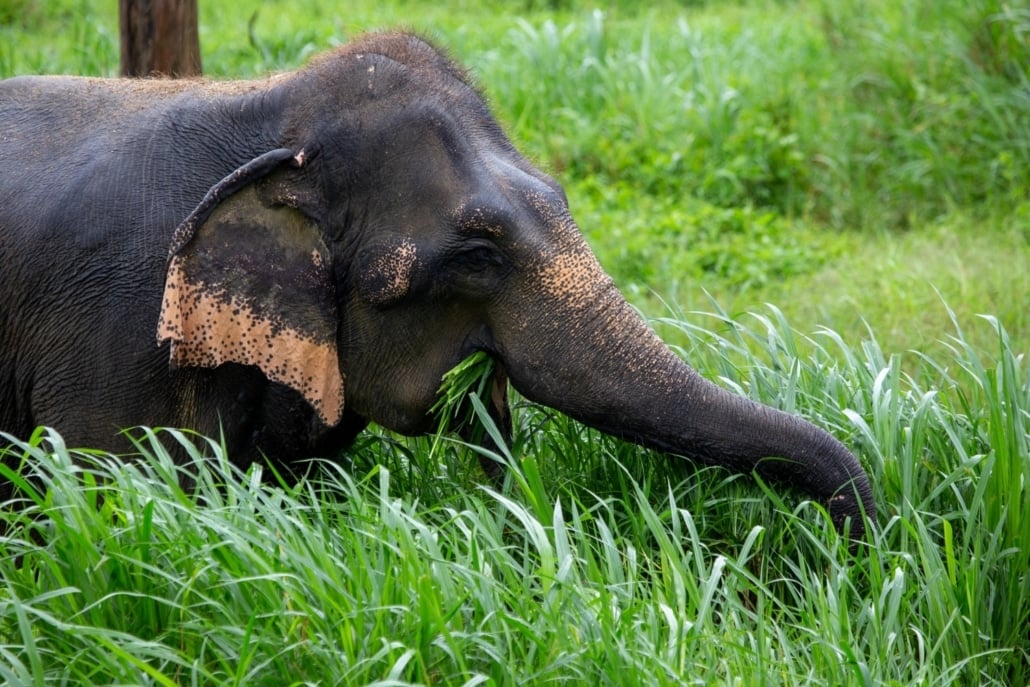
The reasoning behind this shift is straightforward. When elephants are not required to perform, interact, or behave in ways that serve human expectations, they can express natural behaviours freely. They socialise with one another. They forage at their own pace. They move through their habitat on their own terms. These are the behaviours that indicate good welfare. They are also, as thousands of Elephant Hills guests have discovered, far more absorbing to watch than any choreographed encounter.
The wider industry has struggled to keep up. World Animal Protection’s 2026 findings note that while elephant riding has declined from 92% of captive elephants in 2010 to 43% in 2024, many venues have replaced it with washing and close-contact activities that still place stress on animals. The report describes this pattern as exploitation dressed up as ethical tourism. Genuinely observation-led experiences remain the exception.
Elephant Hills removed elephant riding from its programme in 2010. That decision was not reactive. It reflected a considered view, held from the beginning, that the most respectful encounter was one where the elephant remained in control.
What the Ethical Elephant Experience at Elephant Hills Looks Like in 2026
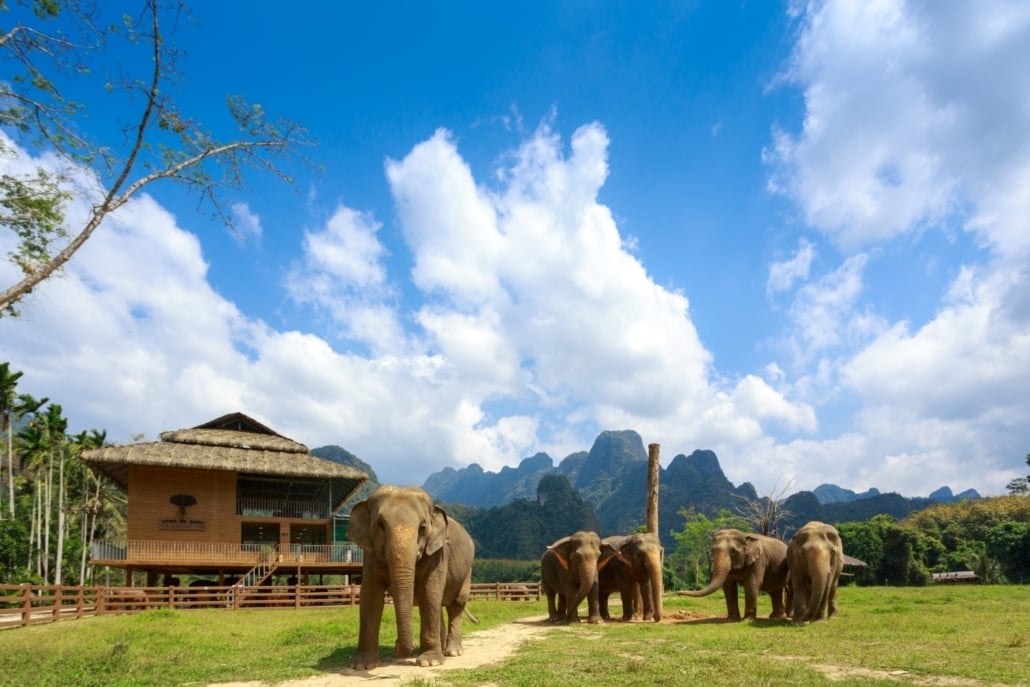
From 1 May 2026, the Ethical Elephant Experience at Elephant Hills and The Bush Camp Chiang Mai has moved further in this direction. The experience is now structured entirely around the elephants’ natural rhythms.
Guests begin by helping our team prepare food for the elephants. This is a practical, hands-on task, chopping, sorting, and assembling the daily diet that gives visitors a genuine understanding of what it takes to sustain a large animal in good health. The prepared food is then placed at designated feeding stations within the elephants’ free-roaming habitat, where the animals come to eat at their own pace, without pressure and without an audience positioned directly around them.
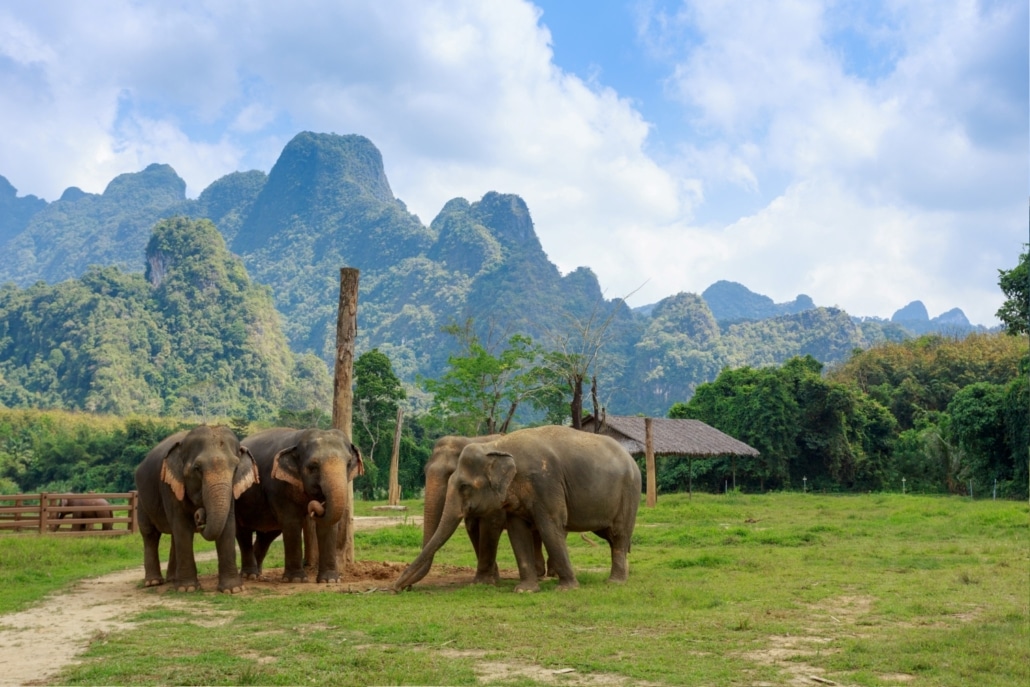
The remainder of the experience is devoted to observation. Guests watch the elephants move through their habitat, interact with one another, and behave as they would in the absence of any human agenda. Our team guides this time with context: the history of each individual animal, the social dynamics of the group, and the welfare principles that shape how the camp operates day to day.
What this produces is not a lesser experience. It is a more honest one. Guests consistently describe the observation period as the highlight of their stay, the moment when the scale, intelligence, and individuality of the elephants become genuinely apparent. Watching a fully grown Asian elephant move freely through dense vegetation, or seeing two animals interact without any human prompting, carries a weight that no posed encounter can replicate.
| What You Do | What the Elephants Do |
|---|---|
| Help prepare daily food with our team | Roam freely in their expansive natural habitat |
| Watch food placed at designated feeding stations | Eat at their own pace, in their own space |
| Observe from a respectful distance | Socialise, play, and graze naturally |
| Learn individual elephant histories from our guides | Express natural behaviours without human direction |
The Psychology of Slow Looking: Why Watching Is a Luxury in Itself
There is a particular quality of attention that observation demands. It is not passive. Watching an elephant well requires patience, stillness, and a willingness to let the animal set the pace. In a world where travel is often structured around activity and acquisition, the next viewpoint, the next photo, the next item ticked off a list, the invitation to simply watch represents something genuinely unusual.
In 2026, this quality of attention has come to define a new kind of luxury. Wellness travel, slow travel, and mindful tourism are among the fastest-growing segments in global travel. The shift is not about doing less. It is about being more present. An observation-led encounter with elephants in the Khao Sok rainforest offers exactly that: a sustained, unhurried engagement with something extraordinary, in a setting where the natural world does not wait for you to catch up.
This matters for families as much as it does for individual travellers. Children who watch elephants living freely, who learn the name and story of each animal, and who understand why space and autonomy matter for large mammals, take something home that goes well beyond a photograph. The educational dimension of an observation-led experience is more substantive than that of a performance-based encounter.
For couples and solo travellers, the contemplative pace of the experience sits naturally alongside the wider rhythm of an Elephant Hills stay. The rainforest setting of Khao Sok National Park, one of the oldest and most biodiverse rainforests in the world, provides a backdrop that rewards exactly this kind of attentive presence. The experience does not need to be dramatised. The context does the work.
Choosing an Ethical Elephant Experience: What to Look For in Thailand
The term “ethical elephant experience” is widely used in Thailand, but not always accurately. Travellers planning a visit in 2026 will encounter a range of claims. The following considerations help distinguish genuinely high-welfare options from those that use ethical language to describe practices that still stress animals.
- • No riding, no performances, no chains. These are the baseline requirements. Any venue that offers elephant riding or staged shows should be avoided.
- • Free-roaming habitat. Elephants should have access to genuinely expansive space, not a small enclosure presented as natural. At Elephant Hills, the elephants’ habitat allows for foraging, social interaction, and autonomous movement.
- • Interaction on the elephant’s terms. Any contact should occur because the elephant chose to approach, not because guests were directed to touch or engage. The 2026 Elephant Hills model is designed precisely around this principle.
- • Transparency about the animals’ histories. Ethical venues know where their elephants came from and are open about it. Our guides at Elephant Hills share the background of each individual animal as part of the experience.
- • Evidence of ongoing welfare investment. Elephant Hills operates a dedicated Elephant Conservation Project that supports animals beyond the camp with food, veterinary care, and ongoing monitoring.
The commitment at Elephant Hills is independently verified. Our Ethical Elephant Experience has received the Responsible Thailand Award for Animal Welfare in both 2024 and 2025. An independent audit by Global Spirit, Animals in Tourism, awarded a 100% rating, the only animal attraction anywhere in the world to achieve this score within the two-week audit period. Elephant Hills has also received a five-star score across all 17 criteria in the Tourism Authority of Thailand’s Sustainable Tourism Acceleration Rating for two consecutive years. These are not marketing claims. They are externally assessed results that reflect how the experience is designed and delivered every day.
For travellers who want their visit to matter to the animals, to the local ecosystem, and to the broader direction of elephant tourism in Thailand, the choice of venue carries real weight. The Ethical Elephant Experience at Elephant Hills is one of the few options in Thailand that fully meet the label’s implied standard.
Frequently Asked Questions
What is an ethical elephant experience in Thailand?
An ethical elephant experience in Thailand is one where elephants are not ridden, forced to perform, or subjected to unnecessary contact. The highest-welfare model centres on observation: watching elephants roam, forage, and socialise freely, on their own terms. At Elephant Hills, the Ethical Elephant Experience has been built around this principle since 2010.
Do you still feed the elephants at Elephant Hills?
Yes. From 1 May 2026, guests will help prepare food for the elephants, which is then provided at designated feeding stations within the elephants’ free-roaming habitat. This supports better dietary management and allows the elephants to eat at their own pace, in their own space.
Why is observation considered the most ethical way to experience elephants?
Observation-only experiences consistently receive the highest welfare scores in independent assessments of Thailand’s elephant tourism industry. According to World Animal Protection’s 2026 research, only around 7% of captive elephants in Thailand are kept at venues offering observation-led experiences, making genuinely ethical options rare and worth seeking out. Elephant Hills is independently audited against 17 welfare criteria by the Tourism Authority of Thailand and has received a 100% rating from Global Spirit, Animals in Tourism, the only attraction in the world to achieve this score within the standard audit window.
What will I actually see during the Ethical Elephant Experience at Elephant Hills?
Guests observe the elephants in their expansive natural habitat, watching them roam, play, graze, and interact with one another. You will also help our team prepare their food before it is placed at the feeding stations. The experience is calm, unhurried, and guided by knowledgeable staff who share individual elephant histories and welfare context.
Is the Elephant Hills experience suitable for families and children?
Yes. The Ethical Elephant Experience is designed to be engaging and educational for guests of all ages. Families will find the observation-led format particularly rewarding, as it encourages curiosity and respect for animals rather than entertainment-based interaction. Details on family-specific tours are available on the all-inclusive family holidays page.
To find out what to bring on your visit, the what-to-pack guide covers everything you will need for a comfortable stay in the rainforest.
Ready to experience it for yourself? Browse our tours and book your place at Elephant Hills in Khao Sok National Park. Whether you are planning a family break, a couple’s retreat, or a solo adventure, our team is available at booking@elephanthills.com to help you find the right experience.
You might also like:
A Small Change, A More Magical Experience – the full story behind our May 2026 update
Supporting Elephants Beyond Our Camps – how Elephant Hills contributes to elephant welfare across Thailand
Blue Mind: Healing on Cheow Lan Lake – the restorative power of slowing down in the Khao Sok wilderness