


Camera Trap Installation to Support Wildlife Conservation 2025
On December 11, the Elephant Hills team conducted a forest patrol to install camera traps as part of its ongoing wildlife monitoring efforts. The research focuses on the Bang Chong area, part of the Khlong Saeng Wildlife Sanctuary, which is adjacent to Khao Sok National Park.

The activity was carried out with official permission from the national park and was closely supervised by a national park ranger throughout the entire trek. The ranger provided guidance, ensured safety, and assisted in identifying suitable locations and coordinates for camera placement.
The installation of camera traps plays a crucial role in wildlife research and conservation. The key benefits of using camera traps include:
– Monitoring and studying the number of animals living within a specific area.
– Observing physical characteristics and natural behaviors of wildlife, which helps inform planning for additional food sources or mineral licks to better support animals.
– Understanding habitat quality by identifying areas that are rich in food resources versus areas with limited availability. This data helps explain why certain locations have a high concentration of animals, while others show fewer wildlife sightings.
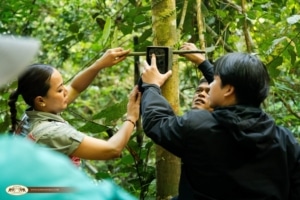
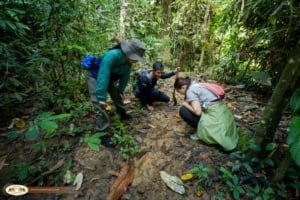
Although our team has extensive experience with camera trap installations, we remain committed to continuous improvement to ensure maximum effectiveness. This includes upgrading protective equipment to better shield cameras from potential damage by animals, as well as refining camera placement techniques.
By carefully observing animal footprints and signs in each area, we can position cameras at optimal angles and determine appropriate distances for each unit. These improvements allow us to capture clearer images and expand monitoring coverage across a wider area of the forest.

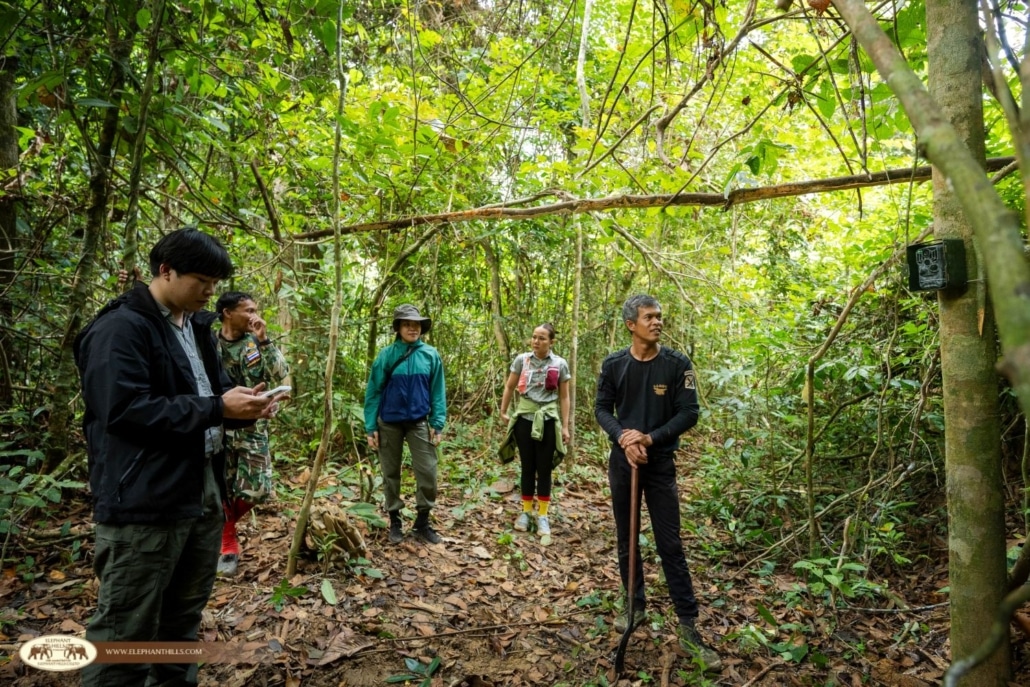

The data collected from this deployment will support evidence-based conservation planning and contribute to the long-term protection and management of wildlife within the park.
Following the installation, the team will return to the site in approximately three months to review the results, retrieve data, and assess the performance of each camera trap.